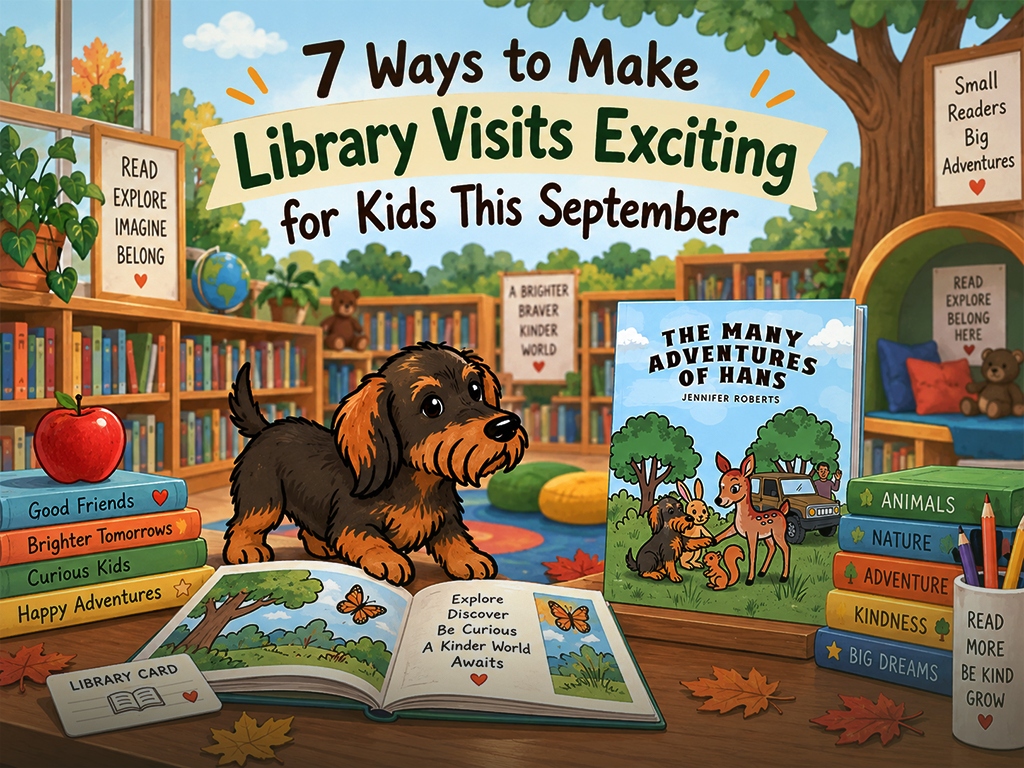
September is one of the best months to introduce your child to one of the most powerful free resources available to every family: the public library.
Every September, libraries across the United States celebrate Library Card Sign-Up Month, an initiative supported by the American Library Association to encourage families to sign up and engage with their local library. For children ages 4 to 8, this is a particularly meaningful moment. Children who develop a genuine relationship with the library early tend to carry that habit into the years ahead.
However, making library visits truly exciting for kids takes a little more than walking through the door. In this post, you will find seven practical ways to make this September memorable, meaningful, and genuinely fun for your child.
Why September Is the Right Time for Library Visits for Kids
Library Card Sign-Up Month happens every September, and it comes at exactly the right time of year. Back-to-school energy is high, routines are resetting, and children are naturally more open to new habits and experiences.
Families who build library visits into their September routine often find it becomes one of the most sustainable reading habits they have. Moreover, many libraries run special September events, reading challenges, and activities for new cardholders, making this month particularly worth taking advantage of.
The library, in short, is one of the most underused tools a parent has. And this month is the perfect nudge to start.
1. Let Your Child Choose Their Own Books
The single most effective way to make a library visit exciting is surprisingly simple: let your child be in charge.
Rather than steering them toward a specific section, follow their lead. If they walk toward picture books for ages 4 to 8 with dogs on the cover, let them browse. If they are drawn to the nature shelf or oversized illustrated encyclopedias, let them sit and look. Children who feel ownership over their reading choices are far more likely to actually read the books they bring home.
Let them pick three or four titles and carry them to the checkout themselves. That small act of independence makes the whole experience feel like theirs.
2. Make the Library Card Feel Special
For many children, receiving their very first library card is a genuinely exciting moment. However, it is easy to rush through it as just another errand.
Instead, build it up beforehand. Tell your child that a library card means they are now officially a reader. Some families take a photo of their child holding their first card. Others let the child keep the card in their own small wallet. These small gestures signal to a child that this is a milestone worth marking.
During Library Card Sign-Up Month, many libraries also offer special events and prizes for new cardholders. Check your local library’s website before you visit so you know what to look forward to.
3. Try a Library Scavenger Hunt
One of the most enjoyable screen-free activities for kids at the library is a simple scavenger hunt. Before you go, write a short list together of things to find: a book with a dog on the cover, a book about animals, a book with a blue spine, a story that makes you smile just from looking at the cover.
This turns a library visit into an adventure rather than an errand. Furthermore, it teaches children how to browse and navigate shelves independently, which builds confidence for future visits.
For younger children, keep the list short and simple. For children closer to seven or eight, you can add more specific challenges, like finding a book set in another country or a story told from an animal’s point of view.
4. Attend a Story Time or Reading Event
Most public libraries run regular story time sessions for young children, and September is often when new seasonal programs begin. These sessions are free, welcoming, and designed specifically for children in the early years.
A library story time does something that reading at home sometimes cannot: it shows a child that reading is a shared, social experience. Hearing a librarian bring a children’s picture book to life with voices and expression is often the moment children realize that books are genuinely exciting.
If your child’s library offers a story time session this month, make it part of your September plans. For more on why reading aloud matters for young children, the post on what makes a great classroom read-aloud is a helpful read for parents too.
5. Create a Reading Ritual Around Library Books
The library visit is only half the experience. What happens at home with the borrowed books matters just as much.
Consider creating a simple ritual around library books. Perhaps library books always get read first, before any books already on the shelf at home. Perhaps Friday evenings become designated library book nights. Perhaps your child gets to stay up fifteen extra minutes when they choose reading over screens.
These small rituals signal that reading is valued and prioritized. Over time, they become habits. And habits formed in early childhood around books and stories tend to last far longer than any single reward or incentive.
6. Pair Library Books With Hands-On Activities
Reading becomes even more memorable when it connects to something a child can do with their hands. After borrowing a book about nature, take a short walk and look for the things the book described. After a story about animals, draw the main character or build something inspired by the setting.
This approach works especially well with children’s picture books that have rich illustrations and strong visual storytelling. The pictures give children something to respond to, recreate, and explore beyond the page itself.
If your child enjoys animal adventure stories, the free printable activity sheets on the activities page are a wonderful example of this kind of hands-on extension. Coloring pages, mazes, and creative worksheets that bring a story to life beyond the book itself.
7. Let Kids Books About Dogs Lead the Way
For children who are not yet naturally drawn to books, finding the right character can make all the difference. And for many children, that character is an animal.
Kids books about dogs, in particular, have a remarkable ability to draw reluctant readers in. Dogs are familiar, funny, and full of personality. When a child recognizes something true in a dog character, they stop thinking about whether they like reading and simply get absorbed in the story.
During Library Card Sign-Up Month, use the library’s animal section as a starting point. Let your child find a dog character they connect with. Once they have found one they love, they will come back looking for more.
If your child enjoys adventure stories with warm, funny animal characters, The Many Adventures of Hans is a picture book for ages 4 to 8 worth requesting at your library or picking up from the book page. Hans the wirehaired Teckel has a way of turning even the most hesitant young reader into someone who asks to read it again.
Frequently Asked Questions
Q1: What is Library Card Sign-Up Month, and when does it happen?
Library Card Sign-Up Month is an annual initiative celebrated every September in the United States, supported by the American Library Association. It encourages families to sign up for a free library card and engage with their local library’s resources and events.
Q2: What age is a good time for a child to get their first library card?
Most public libraries issue library cards to children of any age, often with a parent or guardian signing as a guarantor. Many families sign their children up as early as age three or four. The earlier a child has their own card, the sooner the library becomes a familiar and comfortable place for them.
Q3: How can I make library visits exciting for kids who are reluctant readers?
Let them choose their own books without steering or correcting their choices. Try a library scavenger hunt to make browsing feel like a game. Attend a story time session together. And pair any book they borrow with a small hands-on activity at home to extend the experience beyond the page.
Q4: What are the best children’s picture books to borrow during September?
Look for books with vivid illustrations, simple language, and a strong animal or adventure character your child can connect with. Kids books about dogs, woodland animals, and outdoor adventures tend to work especially well for children ages 4 to 8.
Q5: Are library visits for kids free?
Yes. A library card is free, and borrowing books costs nothing. Many libraries also offer free story time sessions, reading programs, and activity events throughout September as part of Library Card Sign-Up Month.
Q6: Are there free activities to go alongside picture books for ages 4 to 8?
Yes. Many authors offer free printable activity sheets to accompany their picture books. The activities page at authorjenniferroberts.com offers free Hans-themed coloring pages, mazes, and creative worksheets that work beautifully as a follow-up to reading The Many Adventures of Hans together.