There’s something undeniably special about stories told through animals. For generations, animal characters have helped children understand the world around them in a way that feels safe, engaging, and deeply relatable. From classic bedtime tales to modern children’s books, these stories continue to play an important role in emotional and social development.
The Many Adventures of Hans is a beautiful example of how animal storytelling can go beyond entertainment and become a powerful tool for connection, especially between parents and children.
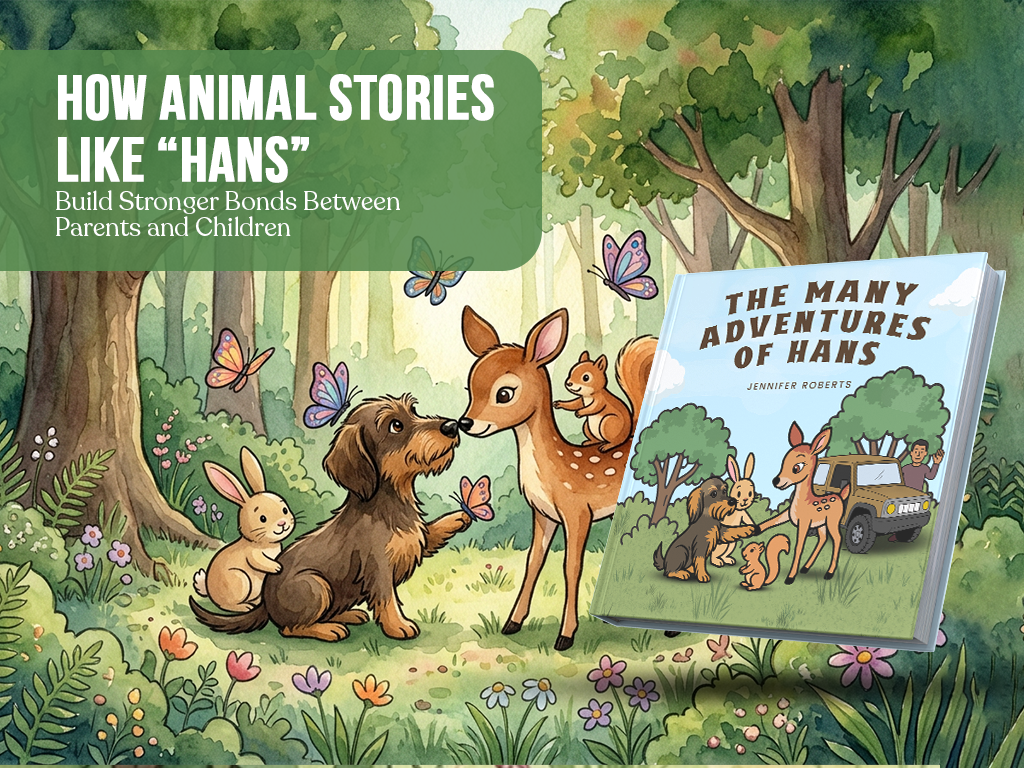
At the center of the story is Hans, a playful and curious Teckel with a big personality and an even greater sense of adventure. His small size, expressive nature, and love for exploring instantly capture a child’s attention. Children don’t just read about Hans, they experience the world through him. They feel his excitement as he runs through the forest, his curiosity as he sniffs new surroundings, and his joy as he discovers something new.
This immersive connection is what makes animal characters so effective.
Unlike human characters, animals create a sense of emotional safety. Children are more open to exploring feelings through a character that doesn’t feel judgmental or overly complex. Hans isn’t perfect; he’s impulsive, curious, and sometimes makes mistakes. And that’s exactly why children relate to him so easily.
When Hans runs off into the forest without waiting, children recognize that familiar urge to explore. When he realizes he’s lost, they feel that sudden shift from excitement to fear. And when he begins to worry, they understand those emotions without feeling overwhelmed.
This emotional journey is incredibly valuable.
It allows children to process feelings such as uncertainty, fear, and relief in a controlled, comforting environment. Instead of being told how to feel, they learn by experiencing the story alongside Hans.
But the real magic happens when this story is shared.
Reading The Many Adventures of Hans together transforms a simple story into a meaningful bonding experience. It creates moments where parents and children connect emotionally, react together, and build shared memories.
Think about the moments within the story:
• When Hans is introduced as a funny-looking but lovable dog, children laugh and engage
• When he excitedly begins his adventure, there’s a shared sense of anticipation
• When he gets lost, parents can pause and comfort their child
• When he meets friendly animals who help him, there’s relief and reassurance
These shared reactions strengthen emotional connection. The child doesn’t just hear the story; they feel it alongside their parent.
This is especially important in early childhood, where bonding experiences shape a child’s sense of security and trust. Storytime becomes more than a routine; it becomes a safe space.
Another powerful aspect of the story is how it teaches lessons without feeling instructional.
Instead of directly telling children what to do, the story gently demonstrates it. For example, when Hans realizes he’s lost and admits he needs help, it reinforces the idea that asking for help is okay. When the forest animals come together to guide him, it highlights teamwork and kindness.
These lessons are subtle but impactful:
• Actions have consequences (wandering off leads to getting lost)
• Fear can be overcome with support
• Friendship and teamwork make challenges easier
• It’s okay to rely on others
Because these messages are embedded in a story, children naturally absorb them.
For parents, this provides a valuable tool. It allows you to guide your child’s understanding without sounding overly instructive. After reading, you can ask simple questions like:
• “Why do you think Hans felt scared?”
• “Who helped him?”
• “What would you do if you needed help?”
These discussions encourage critical thinking and emotional awareness.
The animal-centered theme also adds another layer of relatability, especially for families who have pets. Hans’s personality mirrors the playful, curious nature of real dogs, making the story feel authentic and familiar. For children, this further strengthens the connection.
From a broader perspective, books like this are not just stories; they become part of a child’s emotional foundation. They teach empathy, build imagination, and create positive associations with reading.
They also align perfectly with what modern parents are looking for today: content that is both engaging and meaningful.
Parents want stories that:
• Encourage emotional growth
• Support bonding time
• Provide gentle life lessons
• Keep children entertained without overstimulation
The Many Adventures of Hans delivers on all fronts.
It’s a story that works in multiple ways: fun for children, meaningful for parents, and impactful in the long run. It naturally extends into activities like storytelling sessions, drawing characters, or even discussing real-life experiences related to the story.
And that’s the true power of animal storytelling.
It creates a connection between a child and a character, between a lesson and an experience, and most importantly, between a parent and a child.
Because in the end, the stories children remember the most aren’t just the ones they read.
They’re the ones they shared.