Every parent knows the feeling. You hold up a book. Your child looks the other way. You try again. They sigh. You suggest reading together. They suddenly remember something very urgent they need to do on the other side of the house.
If you have a reluctant reader at home, you are not alone. Many children between the ages of 4 and 8 resist reading not because they dislike stories, but because something about the experience has not yet clicked for them. The book felt too long. The words felt too hard. Nobody made it feel worth stopping for.
The good news is that reluctance is not permanent. In most cases, it simply means the right book, the right moment, or the right approach has not arrived yet. Here are eight simple ways to help a hesitant reader discover that reading can actually be one of the best parts of their day.
Why Children Who Resist Reading Need a Different Approach
Before trying any of the ideas below, it helps to understand what is usually driving the resistance.
For many children, reading feels like work. It requires effort, concentration, and sitting still, none of which come naturally to a curious, energetic four- to eight-year-old. Furthermore, if a child has struggled with a book that was too difficult or too long, they may have quietly decided that reading is simply not for them.
The goal, therefore, is not to push harder. Instead, it is to lower the stakes and raise the enjoyment. Making reading feel like a choice rather than a requirement is almost always the fastest route to a child who actually wants to read.
1. Follow Their Interests, Not Yours
The single most powerful thing a parent can do for a reluctant reader at home is to stop choosing the books.
Let your child choose what they want to read, even if it is a book about something you find completely uninteresting. Even if it’s the same book they’ve already read four times this week. Even if it is a book with more pictures than words. Interest is what turns a hesitant reader into an enthusiastic one, and interest can only come from the child themselves.
For children who love animals, kids books about dogs can be especially appealing to some reluctant readers. Dog characters tend to be immediately relatable, funny, and full of personality. A child who would never pick up a book about school or feelings will often happily sit through an adventure story starring a curious, scruffy dog.
2. Read Aloud Together, Every Day
Reading aloud to a child is one of the most consistently recommended ways to build a love of books, even for children who resist reading on their own.
When a parent reads aloud, the child does not have to work at decoding words. Instead, they can simply enjoy the story. They hear the rhythm of language, follow the plot, and feel the emotions of the characters without any of the effort that makes independent reading feel hard.
For more on how reading aloud together builds not just reading skills but genuine connection, the post on Hans and the power of parent-child bonding through books explores this beautifully and is worth reading alongside your child’s next book.
3. Create a Screen-Free Time of Day
One practical way to support a child who resists reading is to create space in the day where screens are not the available option.
When screens are off and books are within reach, reading becomes a more natural choice. Consider designating one part of the day as screen-free time, whether that is after school, before dinner, or the thirty minutes before bed, and fill that time with books, audiobooks, or reading together.
Screen-free activities for kids do not have to feel like a restriction. When reading is presented as the enjoyable option rather than a fallback, many children adapt more readily than their parents expect.
4. Let Them See You Reading
Children learn far more from what they observe than from what they are told.
If a child regularly sees the adults in their home reading for pleasure, reading becomes something people do because they want to, not something children are made to do. Even ten minutes of visible reading each day sends a quiet message about the value of books.
This does not have to be elaborate. A parent reading on the sofa while a child reads nearby is enough. The shared quiet, the sense that everyone in the room is absorbed in something good, can become its own kind of ritual over time.
5. Try Picture Books for Older Children Too
Many parents assume that picture books for ages 4 to 8 are only for the youngest readers. In practice, children’s picture books work well for hesitant readers at any point in this age range, including children who are already seven or eight.
The combination of rich illustrations and short, focused text makes picture books far less intimidating than chapter books. A child who has resisted reading can often complete a picture book in a single sitting, which gives them a genuine sense of accomplishment. That feeling of finishing something tends to be motivating.
Moreover, the best picture books for ages 4 to 8 are not simple in their themes. Courage, friendship, belonging, and overcoming fear appear in strong picture books just as meaningfully for an eight-year-old as for a four-year-old. The format is accessible. The content is not.
6. Use Activities to Extend the Story
Reading becomes more engaging when it connects to something a child can do with their hands after the book is finished.
After reading a story set in a forest, go outside and collect leaves. If the book is about animals, draw the characters together or act out a scene. For an adventure story, create a simple map of where the character travelled.
This kind of hands-on extension gives a hesitant reader a reason to pay attention during the story because something enjoyable is coming afterward. Furthermore, it makes reading feel like the beginning of an experience rather than the end of one.
The free printable activity sheets on the activities page are a good example of this approach. Hans-themed coloring pages, mazes, and creative worksheets give children something to do with the story after the last page.
7. Visit the Library Regularly
A child who resists reading at home often responds differently in a library. The variety of options, the freedom to browse without being guided, and the absence of pressure can bring out a curiosity that does not always appear at home.
Making library visits a regular part of the month rather than an occasional outing gives hesitant readers more opportunities to stumble across something that interests them. Let your child spend as long as they want browsing. Let them pick books based entirely on the cover or the illustrations. There is no requirement to finish anything borrowed.
The goal is not to maximize the number of books read. It is to build a comfortable, positive association between your child and the place where books live.
8. Keep Looking for the Right Book
Many parents of children who resist reading describe a moment when one particular book changed things. Sometimes it is a book about a topic the child is already obsessed with. In other cases, it is a character who feels surprisingly similar to themselves. It may also simply be a book that makes them laugh.
There is no guarantee that any single book will work for every child, but the search itself is worthwhile. Trying different formats, different characters, and different topics gradually narrows down what resonates.
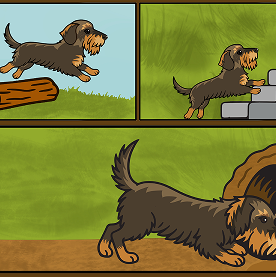
For children who enjoy animals and outdoor adventures, The Many Adventures of Hans may appeal to readers who respond well to funny, warm animal characters. Hans, the wirehaired Teckel, is small, brave, and entirely believable, and the story moves quickly enough to hold attention without demanding too much.
Visit the book page to find all available formats and see whether Hans might be the right fit for your child this September.
Frequently Asked Questions
Q1: What is a reluctant reader at home, and why does it happen?
A reluctant reader is a child who resists reading independently or shows little interest in books. It often happens when reading has felt difficult, pressured, or simply less appealing than other activities. It does not mean a child dislikes stories, only that the right approach or the right book has not yet arrived.
Q2: At what age should I be concerned about a hesitant reader?
Some resistance to reading is completely normal between ages 4 and 8, particularly as children are still developing their reading fluency. If your child shows no interest in being read to, struggles significantly with age-appropriate books, or seems to find reading physically difficult, a conversation with their teacher or a reading specialist may be a helpful next step.
Q3: What kinds of books work best for children who resist reading?
Books with strong animal characters, picture book formats, vivid illustrations, and humor tend to work well for many hesitant readers. Kids books about dogs can be especially appealing to children who love animals, because the characters are often relatable and the stories tend to move at a good pace.
Q4: How do I make reading fun for kids without turning it into a battle?
Remove pressure entirely. Let your child choose their own books, keep reading sessions short and positive, and never use finishing a book as a requirement. Read aloud together so the experience is shared rather than solitary. Pair books with hands-on activities afterward to give reading a sense of continuation.
Q5: Are screen-free activities for kids effective for building reading habits?
Designated screen-free time can create space for reading to feel like a more natural choice. Children who have regular screen-free periods at home may reach for books more readily, especially when interesting books are kept within easy reach. Results will vary by child and household.
Q6: Where can I find picture books for ages 4 to 8 that work for reluctant readers?
Your local library is the best starting point because you can borrow freely without any pressure to finish. For animal adventure stories with warm, funny characters, The Many Adventures of Hans is available on Amazon and through the book page at authorjenniferroberts.com.