If you have ever owned a dachshund, you already know. The moment the leash comes off, they are gone. Nose down, ears flapping, tail going like a little propeller. They do not ask permission. They do not check the map. They simply follow whatever smell has grabbed them and disappear into the world with complete confidence.
That is Hans in a nutshell.
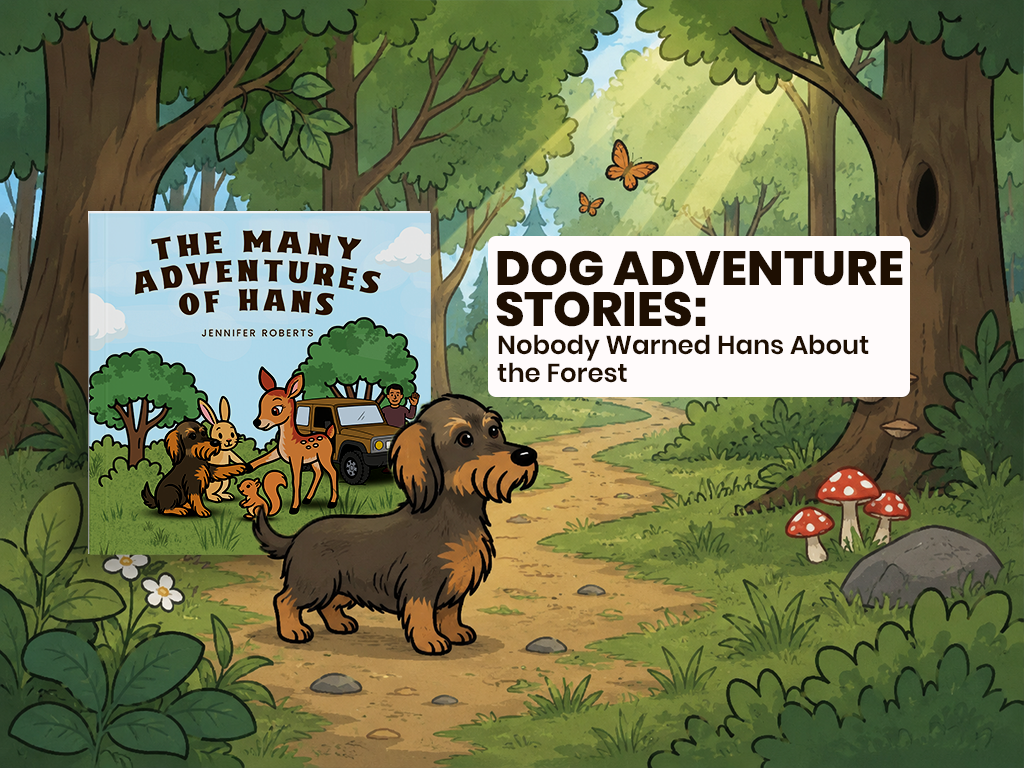
The Many Adventures of Hans is one of those dog adventure stories that feels deeply, almost hilariously true to anyone who has ever loved this breed. Hans does not wander into the forest because he is reckless. He wanders in because he is exactly who he is: curious, joyful, and completely incapable of ignoring a good trail. What happens next is the story that neither he nor his owner Mike saw coming.
What Is a Teckel Dog and Why Does It Matter for This Story
Before we dive into the adventure itself, it helps to understand who Hans actually is.
Many readers pick up this book already familiar with dachshunds, those long-bodied, short-legged dogs that have become one of the most recognized breeds in the world. But what is a teckel dog exactly? The word Teckel is simply the German name for the dachshund. In Germany and across much of Europe, this is what the breed has always been called. Hans, being a proper German Teckel, carries that name with pride.
When it comes to the teckel vs dachshund difference, there is no real difference in the dog itself. It is purely a matter of language and geography. In Germany: Teckel. In the English-speaking world: dachshund. Same brave, stubborn, endlessly curious dog.
Hans is specifically a wire haired dachshund, which means he has that distinctive scruffy coat, a proper beard, a little mustache, and an expression that suggests he is always thinking about something he is not quite ready to tell you. Wire haired dachshunds were originally bred for hunting in dense undergrowth, which explains a great deal about why Hans has absolutely no hesitation walking into a dark forest alone.
The Adventure Begins: A Nose That Knows No Limits
The story opens with Hans and Mike driving into the forest in their jeep, bumping along a dirt road with Hans hanging his head out the window, ears flapping in the breeze, nose already cataloguing every smell the forest has to offer.
This is spot-on dog behavior for kids to witness and recognize. Real dachshunds live through their noses. A dog’s sense of smell is estimated to be tens of thousands of times more powerful than a human’s, and for a wire haired dachshund bred specifically for tracking, that nose is not just a body part. It is a whole world of information.
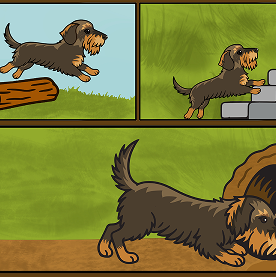
When Mike opens the jeep door, Hans does not pause. He does not wait for instructions. He is already gone, paws thumping on soft dirt, leaping over logs, squeezing through gaps, chasing a butterfly, then a dragonfly, then discovering a ladybug that lands right on his nose and makes his eyes go crossed.
For anyone who shares their home with a dachshund, this opening is not fiction. It is a Tuesday afternoon.
When the Forest Gets Quiet: Lost Dog Stories for Kids Done Right
The tone shifts gently when Hans stops and looks around.
The jeep is gone. Mike is nowhere. The trees all look the same. This is the moment that transforms a cheerful forest adventure for kids into something with genuine emotional weight.
Hans feels it. His ears droop. His body tightens. The forest that felt like a playground moments ago now feels very large and very quiet. Among lost dog stories for kids, this one stands out because it does not skip past the discomfort. It lets Hans sit in that uncertain moment just long enough for young readers to feel it with him.
Then something snaps in the darkness behind him.
Hans hides behind a tree, eyes squeezed shut, body trembling. What emerges from the shadows is not a threat at all. It is Lucy, a gentle deer with kind eyes. Beside her are Jack the rabbit and Ellie the squirrel. Three woodland animals for kids who have never felt threatening in a single moment of this story, and whose arrival turns Hans’s worst moment into the beginning of something genuinely wonderful.
Forest Friends and the Journey Home
What follows is a forest adventure for kids built on the kind of teamwork that feels completely natural.
Each animal brings something different. Jack hops ahead and scouts the trail, spotting broken twigs that mark the way. Ellie races up into the trees and becomes their lookout, the eyes above the canopy. Lucy walks steadily beside Hans, offering calm reassurance when the path gets hard.
And Hans? He does what wire haired dachshunds do best. He puts his nose to the ground and follows the scents that no one else can read.
Together they cross a cold creek, climb a steep hill, and follow the distant smell of campfire smoke rising through the trees. The woodland animals in this story are not talking toys or magical helpers. They are companions with their own strengths, pulling together toward a shared goal.
When Hans finally hears the familiar vroom of Mike’s jeep engine and breaks into a full sprint, short legs going impossibly fast, the payoff is complete. He earned it. They all did.
For more on what dogs like Hans can teach children about loyalty, curiosity, and showing up for the people they love, the post on 5 life lessons kids can learn from dogs is a wonderful companion read.
Why This Is the Bedtime Story Dog Adventure Families Keep Returning To
There is something about dog adventure stories that works especially well at bedtime. Dogs are already deeply woven into the emotional lives of most families. A story centered on a dog feels personal in a way that stories about fictional creatures simply do not.
The Many Adventures of Hans works as a bedtime story dog adventure because it moves through a full emotional arc in a short, satisfying read. Excitement, tension, fear, friendship, and a warm homecoming. By the final page, the child feels the same relief Hans feels. Safe, happy, and ready to sleep.
For dog-loving families especially, Hans feels like someone they already know. That slightly crazy dash toward every interesting smell. That unstoppable enthusiasm. That deep, uncomplicated joy of being reunited with the person they love most.
Download the free forest-themed activity sheets from the activities page to extend the adventure beyond bedtime. Coloring pages, puzzles, and cut-and-play sheets that bring Hans and his woodland friends to life on paper.
You can find all formats of The Many Adventures of Hans on the book page.
Frequently Asked Questions
Q1: What makes this different from other dog adventure stories for kids?
Hans sits in a sweet middle ground: funny and relatable, genuinely exciting, and emotionally honest without ever becoming heavy. It is the kind of dog adventure story both children and dog-loving adults enjoy equally.
Q2: What is a teckel dog and is it the same as a dachshund?
Yes, exactly the same dog. Teckel is the German name for the dachshund. Hans is a wire haired teckel with a scruffy coat, a beard, and the breed’s famously determined personality.
Q3: Is this a good bedtime story dog adventure for younger children?
It is ideal. The language is warm and rhythmic, and the story ends in safety and happiness. Children aged 4 to 8 respond especially well to it as a bedtime read-aloud.
Q4: Are the woodland animals in the story scary for young readers?
Not at all. Lucy, Jack, and Ellie are introduced with warmth and gentleness. The forest in this story is full of kindness, not danger.
Q5: Does this book work for children who do not own dogs?
Absolutely. Hans translates to any child who has ever felt excited about exploring, nervous about being lost, or grateful for a friend who showed up at just the right moment.
Q6: Where can I find this dog adventure story for my child?
The Many Adventures of Hans is available on Amazon and through Jennifer’s website. Visit the book page for all formats and ordering details.